
Integrated Amplifiers
-
 $485.00
 -
ASR Emitter Plus sold trade
ASR Emitter Plus. Probably the best value in a reference caliber integrated you will ever find. Learn More$5,999.00 -
Peachtree NOVA 3 available either in USA or International Voltage
Peachtree NOVA 110 or 230V excellent condition Specifications: Amplifier 80 Watts per Channel <1% Distortion into 6 Ohms ST MOSFET Amp Modules Sigma Servo Internal Wiring Configuration Preamplifier Hybrid Tube Design (6922) 6.5V Output at 2.0V Input <30 Ohms at the Output Stage Class A Output Stage Switching Relays in the Signal Path Polypropylene Caps in the Signal Path Headphone Amplifier (Shared with the Pre-Out Stage) Suitable for All Electro-dynamic Headphones Frequency Response: DC ~ 100 kHz +/- 0.1dB Voltage Gain: 10dB Maximum Output Voltage: 7Vrms Output Impedance: <30 Ohms Maximum Output Power: 100Mw/8 Ohm/300mW/150 Ohm/150mW/300 Ohm Class A Output Stage 6922 Tube in Circuit Digital to Analog Converter (DAC) 5 Digital Inputs: 1 USB, 2 Coax, 2 Optical ESS 9006 DAC 24/96 Upsampling 11 Regulated Power Supplies Organic Capacitors Class A Output Stage Transformer-Coupled Digital Inputs Galvanically Isolated USB Stage >122db S/N <1 Picosecond Jitter Measured at the Master Clock (Super Clock) Dimensions: 5 x 14.75 x 14 (inches) Weight: 26 lbs Learn More$799.00 -
Devialet Expert 200
Devialet Expert 200, original box/packing, excellent condition Learn More$2,700.00 -
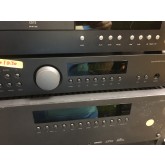
Arcam A28 integrated amplifier
Arcam A28 integrated amplifier Power output: 75 watts per channel into 8Ω (stereo) Frequency response: 20Hz to 20kHz Total harmonic distortion: 0.5% Input sensitivity: 2.5mV (MM), 250mV (line) Signal to noise ratio: 88dB (MM), 98dB (line) Output: 0.63V (Pre out) Dimensions: 432 x 275 x 85mm Weight: 8.5kg Learn More$799.00 -
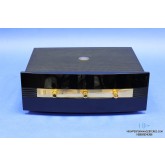
Sonus Faber Musica Integrated Amplifier not working
Sonus Faber Musica Integrated Amplifier has dc we can't get support from Sonus Faber so selling it as is not working properly 115 or 230V, original box/ manual Learn More$1,500.00 -
 $499.00
 -
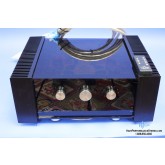
ASR Emitter II Exclusive 4 chassis
ASR Emitter II Exclusive 4 chassis purchased new in 2019 excellent condition with original packing In 10/22 Inquire for trucking quote. Learn More$16,999.00 -
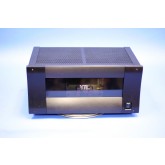
VTL S150 Stereo Power Amplifier
VTL S150 2 available as of 5/26 excellent condition Learn More$3,000.00 -
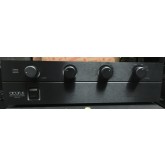
Acurus DIA-100 Digital Input Amplifier
Acurus DIA-100 Digital Input Amplifier, bench tested 5/18 Learn More$600.00 -
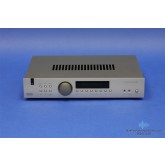
Arcam A18 intergrated Amplifier
Arcam A18 intergrated Amplifier, bench tested 5/18 Learn More$450.00 -
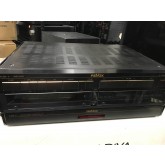
Revox B-250-S Integrated with B210 remote terminal and B207 Infrared transmitter
Revox B-250-S Integrated with B210 remote terminal and B207 Infrared transmitter, in rare top of the line black Learn More$2,500.00 -
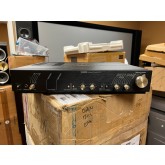
Tandberg 3012
Tandberg 3012 integrated in 10/21 rare built 1984 pecifications Power output: 100 watts per channel into 8Ω (stereo) Frequency response: 5Hz to 100kHz Total harmonic distortion: 0.02% Signal to noise ratio: 73dB (MC), 78dB (MM), 87dB (line) Dimensions: 435 x 83 x 350mm Weight: 9.7kg Year: 1983 Learn More$1,000.00 -
 $5,950.00
 -
Krell K-300i with digital board
Krell K-300i with digital board like new, all accessories in black $10500 retail Learn More$5,999.00 -
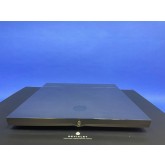
Devialet Expert 130 Pro DAC-Integrated Amplifier
Devialet Expert 130 Pro DAC-Integrated Amplifier The Expert Pro 130 is well above and beyond an ordinary amplifier. In fact Devialet has reinvented and combines all of the key components of an audiophile system (preamplifier, amplifier, DAC, streamer, phono stage) into a single and extremely thin slab. In the 140’s case this has been combined into a stereo amplifier that is fully configuratable and incorporates all of Devialet’s latest technology including ADHV2®, SAM®, AIR®, EVO®, DAC Magic Wire®. The Expert 130 Pro represents the most beautiful gateway into a new kind of audiophile world. It includes all Devialet exclusive technologies as well as major innovations developed for the new Expert Pro range, including distortion performance multiplied by 2 in stereo and an architecture designed to develop towards new uses The performance delivered by Devialet Expert is the best ever measured, under actual usage conditions (Dual-Mono measurement): 0.00025%THD+ noise (harmonic distortion) at full power 0,0001%THD at 10W/6Ω 0.001Ω Output impedance 133 dB Signal-to-noise ratio Finish: Chassis carved out of a single aluminium block Color: Chrome Finish Dimensions: Length: 383mm | Width: 383mm | Height: 40mm Weight: 5.65Kg Installation: Horizontal or vertical installation with automatic tilt detection Power: 2 x 140 Watts RMS @ 6Ω Signal-to-Noise ratio: 140dB THD – 140W/6Ω: 0.0005% / -106dB THD – 10W/6Ω: 0.00025% / -112dB Output impedance: 0,001Ω Damping factor: 8000 Bandwidth: DC-30kHz (-0.1dB), DC-95kHz (-3dB) Phase: 0.4° at 20kHz, 1.8° at 40kHz Thermal Distortion: Below measurement threshold Technologies: ADHV2®, SAM®, AIR®, EVO®, DAC Magic Wire®, RAM® Intelligence 3 x SHARC 400 MHz DSP’s 1 x 16 MHz RISC processor 4 x 40 MHz RISC processors 1 x 64 MHz RISC processor Learn More$2,300.00 -

Rel Carbon Special (2 available)
Rel Carbon Special (2 available) These were another dealer's demos. Excellent condition, factory boxes Learn More$2,700.00 -
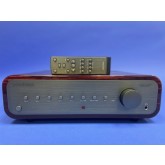
PEACHTREE AUDIO - Nova 300 300Wpc Integrated Amplifier
Nova Specifications Amplifier 80 Watts per Channel <1% Distortion into 6 Ohms ST MOSFET Amp Modules Sigma Servo Internal Wiring Configuration Preamplifier Hybrid Tube Design (6922) 6.5V Output at 2.0V Input <30 Ohms at the Output Stage Class A Output Stage Switching Relays in the Signal Path Polypropylene Caps in the Signal Path Headphone Amplifier (Shared with the Pre-Out Stage) Suitable for All Electro-dynamic Headphones Frequency Response: DC ~ 100 kHz +/- 0.1dB Voltage Gain: 10dB Maximum Output Voltage: 7Vrms Output Impedance: <30 Ohms Maximum Output Power: 100Mw/8 Ohm/300mW/150 Ohm/150mW/300 Ohm Class A Output Stage 6922 Tube in Circuit Digital to Analog Converter (DAC) 5 Digital Inputs: 1 USB, 2 Coax, 2 Optical ESS 9006 DAC 24/96 Upsampling 11 Regulated Power Supplies Organic Capacitors Class A Output Stage Transformer-Coupled Digital Inputs Galvanically Isolated USB Stage >122db S/N <1 Picosecond Jitter Measured at the Master Clock (Super Clock) Dimensions: 5 x 14.75 x 14 (inches) Weight: 26 lbs Learn More$1,395.00 -
Burmester 032 integrated amplifier
Burmester 032 integrated amplifier Gorgeous, beautiful sounding integrated amp... $30,000 USA retail current model Learn More$15,000.00 -
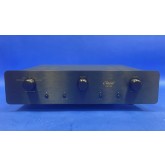
Classe CAP-150 Stereo Integrated Amplifier
Power output: 150 watts per channel into 8Ω (stereo) Frequency response: 20Hz to 20kHz Total harmonic distortion: 0.005% Signal to noise ratio: 90dB (line) Dimensions: 19 x 17 x 5 inches Weight: 35lbs Learn More$895.00 -
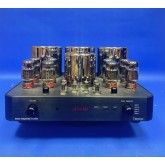
Ayon Triton Stereo Integrated Amplifier
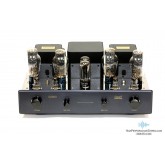
Home | Hi-Fi Audio Reviews | Audiophile Shows | Partner Mags | News April / May 2009 Superior Audio Equipment Review Legendary Performance Awards -- Enjoy the Music.com Celebrates Our 25th Aniiversary World Premiere Ayon Audio Triton Integrated Tube Amplifier The Triton most certainly knows how to sing in my system. Review By Ron Nagle Click here to e-mail reviewer. Ayon Audio Triton Integrated Tube Amplifier Review Love at first sight that may be right but what a sight to see. Domes mirrored with chrome on a satin black base and glass glowing a warm red. Even sitting idle on a side table I was drawn by the Triton. Insinuated by sleek lines and shear mass there was a powerful promise and a no nonsense aura about it. By my measure it was just plain sexy as anything audio could be. Clearly it was a case of lust, at the very least it would take another audiophile to understand my reaction. Most certainly it's all about music but we must ask has Ayon Audio combined the visual and the aural esthetic into a single harmonious whole? Ayon Audio USA of Scottsdale Arizona is the distributor for Ayon Audio in North America the Ayon Company is located in Gratkorn Austria. This company produces a full line of audio components and speakers. So you could build a very nice high-end audio system ranging from a source component to speakers with all of it made by Ayon Audio. Nomenclature The Triton is the Ayon Company's 97 lbs top-of-the-line integrated amplifier. There are many very high quality internal components like dual chokes and Teflon wiring used in the circuits. In this segment I can mention only a few significant features of this hand made amplifier these probably would influence the way it sounds. A detailed list will be included at the end of this report. The question must be does all this voice a fine musical instrument? That is the overriding question we must answer. The Triton is a Class A integrated stereo amplifier switchable between Pentode and Triode operation and it is capable of producing either 125 or 80 watts per channel respectively. Volume levels and the mute function are controllable via a hand held remote control. The tube compliment consists of eight KT88 power pentodes and six 12AU7 dual triode driver tubes. All of the tubes are premium quality hand selected and matched. All the tube boxes are clearly marked as to their positions on the amplifier. The KT88 pentodes are labeled Genalex Gold Lion made in Russia obviously copies of the famous British Gold Lion tubes the 12AU7 dual triodes are labeled TAD Selected. On line I found one retailer selling a matched pair of these KT88 tubes for $100. The Operators Guide cautions you not to touch any of the tubes with bare hands and to use gloves or a clean cloth when installing the tubes. (That's just plain common sense). There are four round chrome plated transformer enclosures. All four transformers have been potted for stability and noise free operation. Two of them are the left and right channel output transformers. Directly in the center between these two is the circuits High Voltage power transformer and just in front of that is the Filament Transformer. The front panel has a Volume Control knob on the left side and in the center there is an eye catching red illuminated AYON logo. A five-position Source Selection knob is on the right side of the front panel. The source positions are simply marked as Inputs 1 thru 4 the last clockwise position is labeled direct. This last direct function is a feature that allows you to connect a preamplifier to the Triton and use it as a Stereo Power amplifier. The top surface of the chassis has two black knobs that allow you to switch the left and right channels between the two modes, Pentode and Triode. Caution: Never actuate these switches with the amplifier turned on. Now we get to the business end of this amplifier, the back panel. Looking at the center back of the amplifier there are six large gold plated speaker terminals three per channel labeled 8 Ohms, 4 Ohms and Ground. On the left side arranged in horizontal parallel rows are the 12 left and right channel unbalanced RCA input connections. From left to right they are labeled Line-1 thru Line-4 the last two positions are labeled Pre out and Direct In. As I said the Direct In is an option that allows you to use the Triton as a Stereo Power Amplifier and the Direct Out can be used for a separate Sub-Woofer hook up. To the right of the speaker terminals are 8 trim pots used to adjust the Output tubes bias, that's one trim pot for each KT88 tube. Just to the right of these are 8 test points labeled TP 1 thru 8. There are four things remaining on the right side, a small on/off switch and just below that is an IEC power cord receptacle. At the extreme right is a red Phase indication lamp and below that a Ground lift toggle switch. Now the Operating Manual tell us these last two things are for use in a foreign market. I had to make a phone call to find out that the toggle switch position points down for use in the United States Amplifier Set Up Wow! This was one large and heavy 121 lbs triple walled cardboard box to peel open. When you cut your way down to the last box and remove the slabs of plastic foam packing you will see a red velvet cloth bag with a drawstring. Inside that there are four smaller red velvet Fez like covers over the four chrome transformers. Several aspects of this amplifier mandates that it should be accessible from all sides not the least of these is provide proper ventilation. The power on/off switch is located on the rear of the chassis as are the test points and tube bias trim pots. In addition to that the dimensions and weight of the Triton made placement on my equipment rack highly impractical. With some help I placed the Triton on a small sturdy wooden table between my speakers. The Operators Manual cautions the user not to turn on the amplifier before the speaker cables and inputs are connected and this is advice worth repeating. Why? With no speakers connected resistance seen at the amplifier output is infinite and no amplifier can drive that kind of a load without a risk of possible damage to the amplifier. With all connections made you should be ready to apply power but first double check to make sure all the bias trim pots are turned down, fully counter clockwise. When you actuate the rear power switch the Ayon logo on the front panel lights up and after a 40 second warm up a power on relay closes. With a digital voltmeter connected between a common speaker terminal and the Test Points-1 thru 8 you then proceed to adjust each of the corresponding trim pots close to the listed 430mv bias specification. After approximately one hour playing some type of music recheck the bias settings of all the tubes. You should expect these initial settings to change, some will increase and others will decrease. After the tubes settled in I ran the bias for all the tubes at a conservative 400mv. There is a fairly wide variation allowable between tubes roughly 15mv higher or lower than the target set point. The main thing is to try to keep all the tubes at about the same bias setting. Within these limits there should be no detectable change in performance so there is no reason for you to go tweak crazy. As Winnie The Pooh might say, "O Bother!" I ran into a problem straight off. Just out of curiosity I connected my Audio Research SP9 MK3 preamplifier to the Direct In connection of the Triton and there was barely a whisper of sound coming out of my speakers. Could it be that there was an impedance mismatch? At any rate these two high tech beauties didn't want to talk to each other. This is the first time I have ever had this problem and I have had a lot of amplifiers pass through my system. However the Audio Research preamplifier worked normally when connected to any of the other four Line Level Inputs of the Triton. Actually I achieved some very nice sounds with the Audio Research set up but obviously this review must be confined to the Triton amplifier. If you just asked why? It is because you probably would use a different preamplifier and get different results. The Sound As you might expect the sound of the Triton slowly improved over time and at about 30 hours I began to do some serious listening. For purposes of this evaluation all sources went directly into the Line inputs. My sources are two CD players and my digital tuner. They are the Marantz DVD 8400 Universal CD player, Cambridge Audio Discmagic-1 CD transport, Cambridge S-700 Isomagic HDCD D/A Converter fed into ART Audio DI/O Tube D/A and A/D processor Up sampling output to 48/96, Magnum Dynalab FT101a tuner and Dynalab Signal Sleuth. I used three different pairs of speakers to find the essential qualities that form the Triton sound. I steadfastly stuck to only two of my reference CDs, Basia, Time and Tide and Roy Orbison (live) and Black and White Night. First up was a pair of $10,000 two-way Talon Hawk speakers. Listening to both recordings in Pentode mode I thought the sound was smooth clean and articulate with a flat response but focused primarily on the midrange. I then removed the Hawks speakers grill cloth for all my subsequent listening with these speakers. Farther along in this trial the top end of the Triton/Hawk combination opened up more and the soundstage became more dimensional. The answer of course is that the amplifier needs more than 30 hours to burn in and clear its throat. Switching the Triton into Triode mode the whole soundscape and each and every individual element within that space opened up and gained an airy dimensionality. There was an infusion of greater harmonic detailing and subtle overtones accompanied by a more resonant bass. Now voices and instruments were clearly separate elements surrounded in their own sound space. The whole performance was filled with more natural warmth. Clearly this Class A Triode mode would be my choice for long term listening. It sounds more like life and is easier to relate to. Additionally I wired up my floor standing four way AV123 Strata Mini speakers. These are great speakers but they have a built in 350 watt subwoofer so the bass response is not strictly relevant to our review component and this inquiry. Ayon Audio Triton Integrated Tube Amplifier To answer any doubts as to what I heard I swapped out the Hawks for a pair of two way Aurum Cantus SE2 speakers ($1600) placed on the same 24-inch high stands. The SE2 speakers are one of my references because they have a 70mm ribbon tweeter that is specified flat out to 40 kHz, plus I switched back to pentode operation with the SE2 in the system. The Triton exhibited better treble extension then when they powered the Hawks and I would judge the bass to be more articulate in the sense that it starts and stops faster. Moving forward with the Aurum Cantus SE2 speakers still in the system but now we switch the Triton amplifier into Triode operation. Once again it's basically the same overall improvement with an increase of natural harmonic resonance and a more convincing portrayal of live music. Down at the low end the bass is a not as transient fast but I like the full resonant body it gives the performance. Once again the sound stage opens up it is wider but maybe a little less deep. At this point I am slightly off balance because what I expected to happen didn't. Let me tell you about a very specific small slice of music from my Roy Orbison CD [Orbison Records 82876 78150 2] on track 2 titled Dream Baby. This is a very good example of what I have been trying to convey. On this cut as Roy sings the lyrics Bruce Springsteen sings along with him occasionally leaning over Roy's left shoulder. The surprising thing for me is I can better separate and pick out Bruce's voice from Roy's when the Triton is running in Triode mode. This detailing is a really great example of the expansion of space around individual elements in the performance. My past experience with other amplifiers that could be switched in and out of triode and pentode operation is exactly the opposite of what I am hearing as I listen to the Triton. Typically pentode operation provides more power and is more detailed and dynamic and extended at the frequency extremes this is also true of the Triton. Whereas typical Triode operation is far warmer sounding less detailed and most of what you hear is contained in the midrange that is not what the Triton sounds like! The Triton does something very different and it is hard to describe. Let me try to rephrase and clarify: The triode mode opens the space around each and every element in the performance still it does not truncate the soundstage as I am accustomed to hearing with other triode amplifiers. Also it does not mire the sound in molasses it retains very decent and descriptive transient dynamics. The analogy I could use to describe this characteristic would be like a softer expansive flood lighting effect as opposed to a spotlight. Let me add that various methods of feedback along with different classes of operation and of course differing types of output tubes these by themselves or in combination could account for this counter intuitive paradigm altering result. It is reminder to me nothing is trivial and that superior amplifier design is truly a complex multi faceted art form. Conclusion If I summarize my findings the first hurdle I need to overcome is the $8,450 price tag. To do that you need to take a broad view of what is comparable in today's high-end market for a high power 125 watt Class A tube amplifier. And so even I am a bit surprised to find that at this level of construction and performance the price is quite reasonable. If you get down to individual component parts it looks to me that everything from the hand assembled Teflon wiring to the selection of individual plastic film capacitors is not limited by cost considerations. Yes I prefer one mode of operation to the other. But that does not mean that there is anything wrong with the sound of the pentode mode. 125 watts of Class A power is nothing to sneeze at. Important to remember is that the increased transient speed and articulation of pentode operation is exactly what you might require in a system that lacks adequate definition. Most certainly you will need that kind of horsepower to drive many of the inefficient speakers sold in the high-end market place. There was one last minute experiment to tell you about. I hooked up a cheap subwoofer to the Triton output and that little rumble box sounded better than ever. It did in fact enhance the sound of my two-way speakers. Remember flexible options good no options bad. Again let me express my surprise and delight at the way music is reproduced as piped through 80 watts of Triton triode power. The Triton most certainly knows how to sing in my system I am enjoying myself immensely. It finds the extremely elusive musical middle ground between solid-state speed and the lush glow of single ended triodes it does not sacrifice one to get to the other. Congratulations Ayon Audio, this is a very fine piece of work, far more than just a pretty face. Let me end by saying I want the amplifier the only thing standing between me and the Triton is money. Semper Hi-Fi Reference System Sources Sanders ESL Power Amplifier, Prima Luna 2 Integrated Ultralinear tube amplifier, Ayon Audio Triton Amplifier, Audio Research SP9 MK3 Preamplifier, Marantz DV 8400 Universal CD player, Cambridge Audio Discmagic-1 CD transport, Cambridge S-700 Isomagic HDCD D/A Converter fed into ART Audio DI/O Tube D/A and A/D processor Up sampling output to 48/96, Magnum Dynalab FT101a tuner and Dynalab Signal Sleuth. Speakers Talon Hawk speakers, Onix Rocket Strata Mini 4-way speakers by AV123, Aurum Cantus SE2 Cables Three-meter Kimber Cable 12TC, 3 meter RCA, 3 meter, Wire World Eclipse-2, RCA, 1-meter Chord Silver Siren, 1-meter and Wire World 10 gauge IEC power cord, Audiobhan 0.5-meter unbalanced digital Power Conditioning Richard Gray 20 ampere Substation, Islatrol Industrial 20A ac line conditioner, Alpha Core Balanced Transformer Power Supply, Audio Power PE-1 power enhancer, Triad 2A isolation transformer Accessories VPI Magic bricks, Argent Room Lens system, Room Tunes Panels, a comfortable chair. Specifications Type: Vacuum tube integrated amplifier Frequency Response: 8Hz to 70kHz Operation: Class A Operation Triode or Pentode mode Tube Complement: Eight KT88 and six 12AU7 Frequency Response: 10 Hz to 60 kHz ( -2.5dB) Inputs: Four stereo pairs via RCA plus one stereo pair direct input Output: One stereo pair Loudspeaker Output Impedance: 4 and 8 Ohms Output Power In Pentode: 125 Wpc, two channels Output Power Triode: 80 Wpc, two channels Input Impedance: 100 kOhm at 1 kHz Input sensitivity: 260mV ( full power ) SNR At Full Output: 98dB Negative Feedback: 0dB Remote Control: Yes Dimensions: 50 x 40 x 25 (WxDxH in cm) Weight: 100 lbs Learn More$3,995.00 -
Balanced Audio Technology VK300X
In perfect working order with box and manual $6500 retail Learn More$2,500.00 -
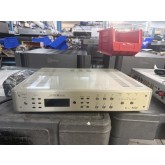
Krell K-300R in silver (only one there is) At the Krell factory 2026
Krell K-300R in silver (only one there is) in silver, newer version of the oriignal Krell Sequrra receiver Learn More$2,700.00 -
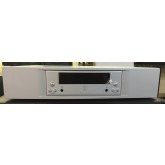
Linn Majik-I integrated
Linn Majik-I integrated, tested 5/18 The Majik-I is smaller than most preamplifiers, to say nothing of integrated amplifiers. It has no knobs, the front panel containing only a power button, a headphone jack, a small display panel, and six control keys. The keys are for muting, volume (up/down), source selection (stepping sequentially in either direction), and recording source selection, which channels any selected input to the tape-out terminals on the rear apron, independent of the source being listened to. For some operations two keys are used simultaneously. For example, pressing the two volume keys simultaneously displays BAL in the window, after which pressing either one shifts the balance in one direction or the other, displaying numbers from -9 to +9 in the window (0 indicates equal levels from both channels). Similarly, you can switch the speakers off for headphone listening by pressing the two center keys simultaneously. Although such procedures can seem confusing when you just read about them, they are amazingly simple and logical in actual use. The Majik-I is a very easy-to-use component. Learn More$999.00 -
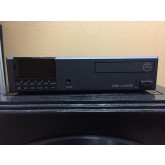
Linn Classik CD/Integrated in black
all in one, compact integrated/cd player $1500 retail Description: Remote-controlled CD receiver with clock, AM/FM tuner section, MOSFET output stage, three line-level inputs, (Aux, Tape In, Tape In) and three line-level outputs (Rec Out, Preamp Out, Headphones). User-programmable functions: Clock, Alarm, Timer (all with automatic switch-on/off). Tuner section: 80 user-definable presets. Tuning resolution: FM Mode. CD-player section: triple-beam laser, delta-sigma conversion. Amplifier Section: Power output: 75Wpc into 4 ohms (15.75dBW), nominal mains. Voltage gain: 28.5dB. Preamplifier output impedance: 100 ohms (loads above 5k ohms recommended). Dimensions: 12.5" (320mm) W by 3.1" (80mm) H by 12.7" (325mm) D. Weight: 13.2 lbs (6kg). Learn More$600.00 -
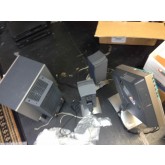
Nakamichi Soundspace 9
slleek , high tech 3 cd player with two speakers, missing subwoofer, very lightly used, never sold demo Learn More$900.00 -
 $400.00
 -
 $1,800.00
 -
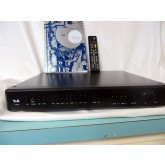
T&A P1230R with mc phono
T&A P1230R with mc phono option Founded in 1978, T+A Elektroakustik of Germany began by building loudspeakers and by 1988 had expanded to electronics. By 1997 T+A which stands for Theory + Application was into active loudspeaker design, CD players, tuners, DACs and home theater components. Today all the essential components and software are developed in house. Subcontractor and final production is fully based in Germany. Learn More$1,900.00 -
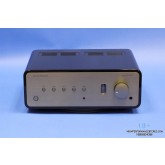 $799.00
 -
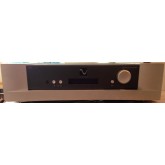
PS Audio GCC-100
one owner, with remote The GCC-100 is a stereo, 100 watt per channel Control Amplifier that produces 200 watt per channel into 4 Ohms and drives speaker loads as low as 1.5 Ohms. It has a damping factor that exceeds 1000 and is capable of driving any moderate loudspeaker to live orchestral crescendo levels. The GCC-100 has an input impedance of 47K Ohms, and features 4 RCA and 1 XLR balanced input and an auxilliary output to drive another amplifier or a subwoofer. It can be remotely turned on/off with a simple 12 volt trigger or the supplied remote control, is a fully balanced amplifier with noise levels low enough that you’ll have to place your ear next to the tweeter to even hear if it’s working. The GCC-100 is a perfect music center for the most discerning stereo system and has the best midrange and top end of any of the three models (although they're all great) Learn More$900.00 -

Linn Selekt DSM Katalyst streamer/intergated amp.
Linn Selekt DSM Katalyst streamer/intergated amp. MSRP 8260. in 4/26 Learn More$4,900.00 -
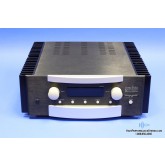
Mark Levinson 383 integrated with remote
Mark Levinson 383 with remote two available as of 5/24 Learn More$2,999.00 -
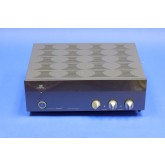
Ensemble Massimo Fuoco hybrid integrated Made in Switzerland
Ensemble Massimo Fuoco hybrid integrated Made in Switzerland with packing in excellent condition Learn More$12,000.00 -
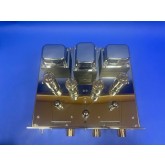
Jadis Diapason Integrated Amplifier
Jadis Diapason as new condition, all packing $4795 retail Learn More$2,999.00 -
 $3,600.00
 -
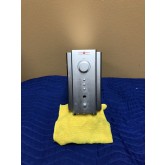
Daniel Hertz Genius Integrated amplifier with USB
Daniel Hertz Genius Integrated amplifier with USB specifications: Power 2 x 50 Watts at 8 Ohm inputs 2 analogue 1 digital (usb) outputs 1 pre out Weight: 8 kg Learn More$999.00 -
 $900.00
 -
Luxman L-509Z
Luxman L-509Z like new, box remote and all almost new Info from Luxman online: Luxman L-509Z Integrated Amplifier - Luxman Taking our Z-Series integrated amplifiers to a performance peak. Introducing our next-level “single-chassis separates” concept, pursuing the ideal with a new, all-in-one flagship amplifier. Taking our Z-Series integrated amplifiers to a performance peak. As the premium model for the new Z-Series generation, the L-509Z has evolved beyond the concept of a traditional integrated amplifier. Both the preamplifier and power amplifier sections simultaneously use our new generation amplification feedback engine “LIFES” for the first time. The volume control is supported by our new “LECUA-EX” attenuator system that suppresses sound quality deterioration and realizes a more precise feel of operation. The “single-chassis separates” concept, which aims for the ultimate in integrated amplifiers, now achieves unprecedented performance. Pursuing the ideals of audio enthusiasm, we are combining our passion for music with improved technology. Our latest amplification feedback engine literally brings music to life with LIFES* Version 1.0 By feeding back only the distorted components generated in the audio signal’s journey to the final amp stage, LUXMAN’s proprietary “ODNF” amplification circuitry achieves excellent static characteristics and natural sound quality as if it were a “non-feedback” system. During the development of the M-10X flagship stereo power amplifier launched in 2021, technical concepts explored there were retained and the circuit configuration, which had become very complex over years of improvements has been completely redesigned to realize “LIFES” exquisite, high-fidelity sound and defines an amplification feedback engine blueprint for our next generation of components. The L-509Z is equipped with independent LIFES modules operating simultaneously in each of its fully discrete pre and power sections. The L-509Z is a pre-main amplifier that is worthy of the “single-chassis separates” concept that incorporates quality seperate units into a single, elegant chassis and has achieved an elevated level of musicality and unprecedented detail in comparison to other amplification circuits. The output section utilizes three stage Darlington bipolar transistors in quadruple-paralleled push-pull configuration to achieve outstanding output power and near perfect power linearity performance comparable to a standalone power amplifier, developing 120W+120W at 8 ohms and 220W+220W at 4 ohms.The result is spectacular sound quality with an abundance of energy. *ODNF stands for “Only Distortion Negative Feedback” *LIFES stands for “Luxman Integrated Feedback Engine System”. Electronically controlled attenuator LECUA-EX* incorporating an elaborate rotation mechanism A tactile, satisfying volume control function is essential for audio amplifiers. To feed a fixed gain power amplifier with a musical signal at a level suitable for listening, precise control is required to smoothly attenuate the voltage while maintaining the quality of the input source. LECUA, developed by LUXMAN, is an electronically controlled attenuator system that switches through a series of high-quality, fixed value resistors for each channel independently. These are neatly arranged on the sub-assembly according to the position of the volume control knob. Since the release of the C-1000f control amplifier in 2006 to commemorate LUXMAN’s 80th anniversary, “LECUA1000”, which similarly integrates into the amplification circuitry, has been used in many LUXMAN products as a volume control system that minimizes the effects of external vibrations and changes in sound quality across the operating range of the volume control and is also resistant to deterioration over time. The L-509Z combines a highly precise rotary encoder with a newly developed weighted rotation mechanism to create the “LECUA-EX”, which offers even greater reliability and a natural, high-quality operational feel. 88 fine steps from 0 to 87dB and an acceleration setting for the speed at which the volume knob is rotated and a long-press setting for the remote control allow for comfortable and thorough volume control action with minimal degradation in sound quality. *LECUA-EX stands for Luxman Electronically Controlled Ultimate Attenuator - Excellent eXperience Highly regulated power supply The L-509Z is equipped with LUXMAN’s traditional, highly stable power supply circuitry, featuring a bespoke, highly regulated 600VA El transformer and newly developed large-capacity filter capacitors (10,000μFx 8) . High-quality phono EQ The built-in high-quality phono equalizer circuit, which supports both MM and MC cartridges, features a new two-step gain switch to select between high and low MC settings to accommodate a wider range of MC cartridges, enriching quality vinyl playback in terms of both operation and sound quality. And a Mute-Button is now featured on the front panel. 3-band tone control In addition to BASS and TREBLE, a new MIDDLE control effective in the vocal and lead instrument frequencies bandwidth has been included. LR balance, line straight, loudness, and other functions are also conveniently at your fingertips Original technology, special attention Peel-coat circuit boards are used for the main audio signal path, eliminating the negative effects of the coating film that can adversely affect sound quality. Unique attention has been paid to every detail, such as the beeline construction, which configures circuits to take the shortest route possible, and a non-angled wiring pattern for smooth signal transmission. Low-impedance transmission Large, low resistance speaker relays are connected in parallel to transmit the driving force from the substantial power supply and output circuitry. Internal, 3.5mm2 ultra-thick cable is directly connected to the speaker terminals to ensure low impedance transmission, achieving a damping factor of 330 (current injection method). High-quality hairline finish top panel The top panel is made of ultra-thick aluminum with an exquisite hairline finish. Large ventilation holes are carefully machined one by one to ensure efficient heat dissipation. Supporting the unit are four large insulator feet made from cast iron, their density gradient protecting the main chassis from unwanted external vibrations. Large needle-movement VU level meter and 7-segment LED Needle-movement type analog VU meters are traditional design statement, proudly characterizing LUXMAN’s solid state integrated amplifiers. The L-509Z is equipped with two large meters, brightly back-lit by LEDs, with sensitive response characteristics. The newly included 7-segment LED display in between the left and right level meters displays the current attenuation amount and is easily visible from the listening position. Headphones outputs with ground isolation In addition to the φ6.3mm standard terminal, a φ4.4mm terminal with independent left and right grounding has been added for pleasurable headphone enjoyment. Using balanced cable equipped headphones improves L-R separation and localization, surrounding the listener with gorgeous three-dimensional sound. High quality input/output terminals Original high rigidity RCA terminals are used for LINE-1 and 2. Separate inputs and outputs for system expansion are provided with two pre-outputs. Two large speaker output terminals with independent on/off switching allow for bi-wire connectivity. Ergonomic aluminum remote control The substantial, ergonomic aluminum alloy remote control can also operate compatible LUXMAN CD players released after 1996. What to expect in the box: L-509Z Integrated Amplifier Remote control (RA-17A) Power cable Product Details: Rated output 120W + 120W (8Ω) 220W + 220W (4Ω) Input sensitivity/ input impedance PHONO (MM): 2.5mV/47kΩ PHONO (MC-H): 0.3mV/100Ω PHONO (MC-L): 0.1mV/40Ω LINE: 180mV/47kΩ BAL.LINE: 180mV/79kΩ MAIN IN: 1.1V/47kΩ Output voltage: PRE OUT: 1V Frequency response PHONO: 20Hz to 20kHz (±0.5dB) LINE: 20Hz to 100kHz (within -3dB) Total harmonic distortion 0.007% or less (8Ω, 1kHz) 0.03% or less (8Ω, 20Hz to 20kHz) S/N ratio (IHF-A) PHONO (MM): 87dB or more PHONO (MC-H): 70dB or more PHONO (MC-L): 62dB or more LINE: 106dB or more Volume adjustment: LECUA-EX Amplification feedback circuit: LIFES 1.0 Output configuration: Bipolar 4-parallel push-pull Damping factor: 330 Max. amount of tone control BASS: ±8dB at 100Hz TREBLE: ±8dB at 760Hz TREBLE: ±8dB at 10kHz Power supply: 230V~(50Hz) / 115V~(60Hz) Power consumption 390W 150W (under no signal), 0.5W (at standby) External dimensions 440(W) x 193(H) x 463(D) mm front side knob of 20mm and rear side terminal of 37mm included in depth Net weight: 29.4kg (main unit) Speaker terminal Supported Y-lug terminal dimension Width of part a: 16mm or less Width of part b: 7mm or more Learn More$9,500.00 -
 $3,650.00
 -
$9,900.00